

You drop into a Battle Royale match, eliminate two opponents with surprising ease, and wonder whether you have finally improved. Then a friend asks a question that changes the meaning of the victory: were those actual human players? Developer-controlled opponents can make onboarding less punishing and help matches start in quieter regions. They can also undermine trust if the game does not explain who was in the lobby or how the result should be interpreted. Epic's original Fortnite disclosures and EA's real Apex Legends experiments from June 2026 offer a grounded way to weigh this trade-off rather than accusing every multiplayer game of a hidden scheme.
Not every character in a lobby is human
The word bot describes different things: an official AI enemy, a practice teammate, or unauthorized software used by a cheater. This article concerns only developer-operated AI opponents. A slow, badly aimed or inexperienced human is not automatically a bot, and bot prevalence cannot be inferred from one easy encounter. Modes, regions, player skill and active experiments matter. Treating every surprising elimination as evidence of hidden artificial opponents confuses a design question with a guess about someone's competence.
Why would a developer use artificial opponents?
A matchmaker tries to reconcile similarly skilled competition, reasonable queue times and enough participants to launch the round. When few people are online, the alternatives may be a long wait or a wider skill mismatch that makes a newcomer easy prey for veterans. A limited number of bots can soften that conflict in appropriate casual contexts. But filling too much of a lobby without explanation risks turning a competitive-looking victory into something quite different from what the player thought they had achieved.
What Epic originally said about Fortnite
In September 2019, Epic announced bots alongside revamped skill-based matchmaking. Its stated goal was a more welcoming path for players to improve, with fewer AI opponents as skill increased. At the time, Epic said bots would not appear in Competitive playlists. This is a dated description of the system's rollout, not an unchanging guarantee about every Fortnite playlist in October 2026. Fortnite's current support guidance still says player skill influences matchmaking and that the strength of opponents may rise with improvement.
Why the June 2026 Apex test matters
In a June 8 matchmaking update, EA described testing limited bot-fill in lower- or mid-skill Unranked Duos and public Trios. It reported that carefully placed bots helped produce better-balanced matches at reasonable speeds, notably outside peak hours, instead of pulling very strong humans into low-skill lobbies. That is a specific developer experiment, not evidence that every casual Apex match has the same percentage of bots. The studio also acknowledged that the feature remained under development.
An important Apex detail players miss
EA explicitly stated in that June report that there were no plans to add bots to Ranked as part of its approach and that bots did not replace missing members of your squad. Filling an opponent lobby and supplying an artificial teammate are different interventions. EA also found that its bots struggled to keep up outside new-player or lower-skill matches. Its report therefore cannot support the claim that Ranked is full of AI teammates or that every weak random squadmate is software.
Bot Royale is not the same as casual bot-fill
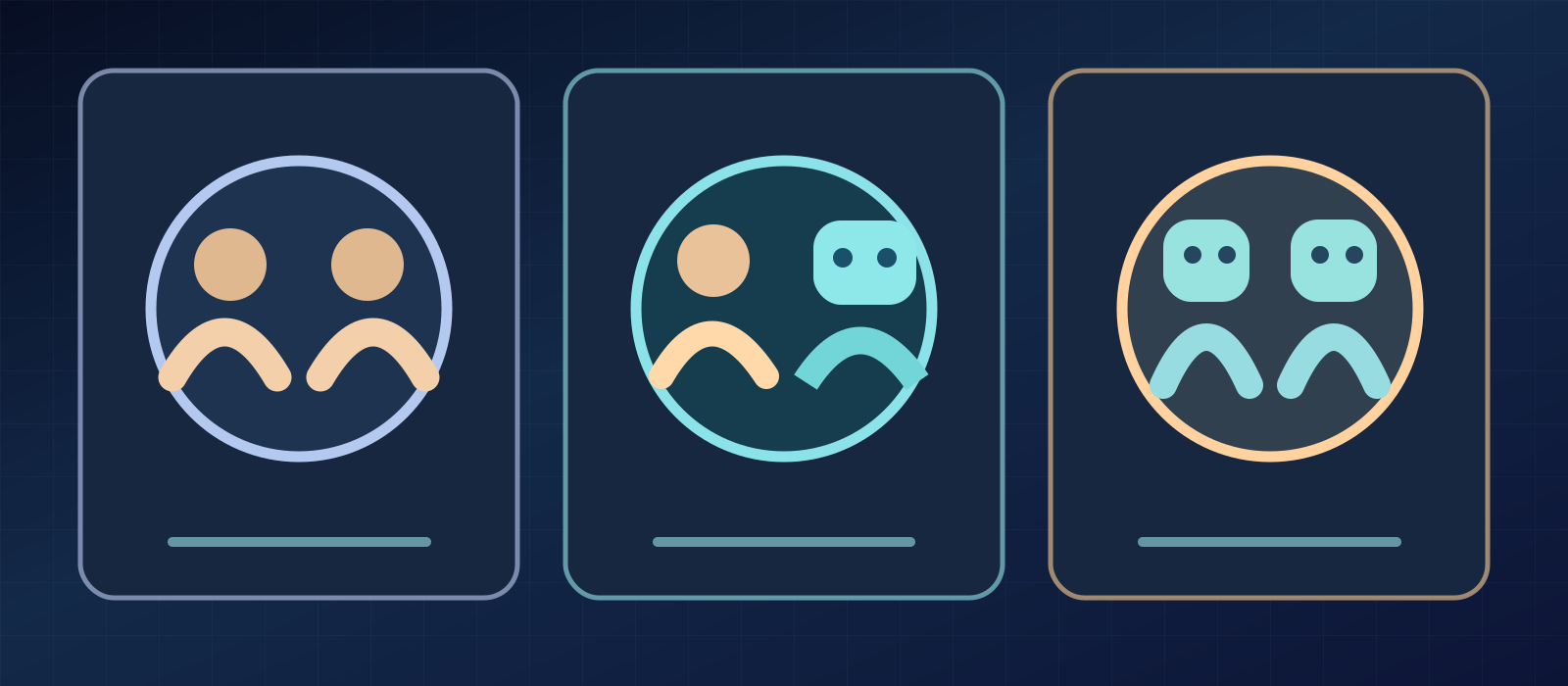
- Human PvP
- Mixed lobby
- Declared AI practice
Apex also has a distinct Bot Royale experience. In its May 2025 Prodigy notes, EA outlined a difficulty selector for Apex bots, including an Auto option intended to adapt based on known player skill. That is an openly AI-oriented practice context. Quietly inserting a limited number of artificial enemies in an Unranked PvP lobby raises an additional question about player expectations. Comparing the two without noting which playlist is under discussion creates unnecessary confusion about what constitutes a competitive match.
Does an elimination against a bot still count?
The enjoyment, aim practice and familiarity gained from the fight are genuine. So is the satisfaction of surviving longer than before. But an easy series of eliminations against scripted opponents does not establish readiness for unpredictable human squads. An honest result needs a context: was this a deliberately AI-heavy practice mode or a normal multiplayer match with limited AI fill? The goal is not to belittle beginners' progress, but to avoid confusing a learning milestone with proof of human competitive superiority.
Transparency does not have to ruin the fun
Some developers may worry that prominently labeling bots takes away the thrill of a first victory. Concealing their presence, however, can damage confidence when players later recognize artificial movement patterns. A useful compromise is a clear playlist description, an onboarding explanation of possible AI encounters, and straightforward rules for how awards, challenge completion and stats work. Revealing exact live bot counts in every round is not essential if those figures change or could be exploited.
Can bots teach better habits—or worse ones?
Controlled opponents create a safer place to learn inventory management, map traversal and targeting before confronting experienced humans. Yet extended exposure to weak AI can reward bad habits: standing in open ground, ignoring cover or expecting an enemy to pause before firing back. Good progression gradually reduces the gap between training and serious PvP. It should avoid both extremes: throwing a newcomer immediately against experts and keeping them so comfortable that their early progress becomes misleading.
The beginner and veteran see different problems
A first-time player may value room to experiment with movement and abilities. A veteran often wants a creative, adaptive opponent whose choices cannot be predicted from a small pattern library. EA openly said bots performed poorly once the lobby's skill exceeded the range they were designed for. That makes a universal bot percentage unlikely to satisfy everyone. A successful matchmaking system cannot be judged only by fast queues or high elimination counts; actual experience matters for each skill band.
Bots and the pressure to shorten queues
A handful of artificial participants can make a quiet-hour game start sooner. But lower waiting time does not automatically make a better match if the encounter loses tension and strategic variety. EA's June report described another, separate tool: increasing the period during which its matchmaker searches for closely rated humans before widening skill requirements. That experiment should not be conflated with bot-fill. Designers have multiple levers and must test their combined costs instead of assuming that AI is the fix for every population problem.

Ranked competition deserves clearer boundaries
When ranks, competitive rewards and reputation depend on match results, consistency of opponent standards becomes especially important. It would be wrong to claim that every game permanently excludes bots from Ranked merely because Epic described that approach in 2019 or EA said it had no plans in June 2026. A developer's policy applies to particular modes and dates. Players should be able to distinguish practice, casual matchmaking and queues intended to establish skill against real competitors.
Can you identify a bot by its name or movement?
Repeated navigation, weak aim and certain decision patterns may invite suspicion. Yet a new human can behave similarly, while AI behavior can change with patches. There is no universal username pattern or elimination threshold that reliably identifies a developer bot across all games. Guessing too confidently can turn a valid design criticism into unfair accusations toward other people. Official developer descriptions and verified playlist information are better evidence than stereotypes about how an inexperienced player moves.
Communicating failed tests builds trust
A useful element of EA's report was its admission of boundaries: lower-skill matches improved, but the bots did not perform well enough against more advanced players. This makes it possible to debate a measured compromise rather than a vague promise of more fun. Publishing where experiments were tried, which game modes are affected and what remains temporary can reduce uncertainty. Clear explanations of how bot encounters contribute to personal statistics can protect the meaning of achievements without exposing every internal parameter.
Choosing the experience you actually want
Newcomers can deliberately choose a bot-oriented training mode where available, practice positioning and equipment usage, then move toward tougher human opposition as comfort grows. Players seeking a true skills test should check the mode's official rules rather than judging the lobby solely by how many easy eliminations it offers. Avoid services promising illicit bot lobbies, match manipulation or account exploitation. You can make an informed choice without trying to reverse-engineer the hidden details of every opponent.
The verdict: AI opponents are not the real enemy
Carefully used bots can improve early learning and reduce painful off-hour mismatches. Used carelessly, they can erode the pleasure of competition by obscuring who was actually beaten. Fortnite's historical explanation and Apex's June 2026 Unranked experiment show distinct, bounded design choices—not proof that all online wins are fake or every playlist is full of bots. The stronger standard is honest labeling, gradual challenge and a fair distinction between training against AI and competing against human players.
Primary official sources (historic policies explicitly dated; reviewed 2026-10-09):