

Two people sharing a screen experience each other's reactions before a voice-chat icon lights up. Yet modern multiplayer often assumes separate systems, individual accounts and an internet connection. That shift makes it tempting to declare couch co-op obsolete, especially when streaming lets distant friends join a local game. But playing beside someone, streaming their controller input and sharing software between separate handhelds are not the same thing. The real question is whether players still benefit when developers treat the shared room as an intentional design space.
Presence is part of the game design
A player can point at the screen, hesitate in a puzzle, or notice a partner's reaction without saying a word. Shared physical space changes how decisions are negotiated. Online voice chat is valuable for people living apart, but it cannot be measured as an exact substitute for the visual cues and spontaneous pauses that happen on one sofa.
Why online became the default
Online systems let friends connect across borders, maintain persistent progression and find a match at almost any hour. Those are substantial benefits rather than evidence that studios dislike local play. Yet they shape budgets: rendering a second viewpoint, managing two control schemes on one machine and testing menus for simultaneous users can seem less scalable than one online client per player.
Split Fiction builds cooperation into its foundation
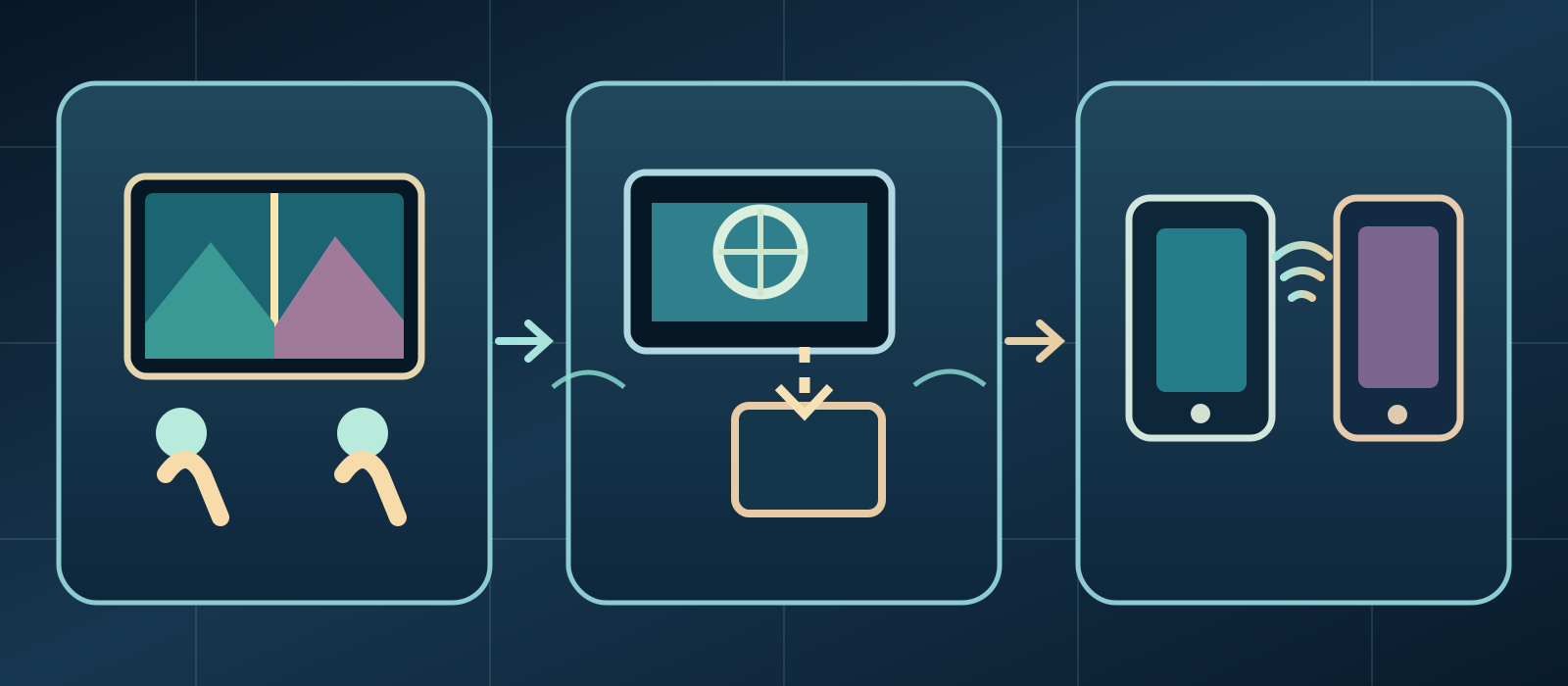
- One shared screen
- Steam host streaming
- Nintendo GameShare
EA presents Split Fiction as a two-player split-screen adventure built around complementary timing and shared problem-solving. The important distinction is that cooperation is the premise, not a checkbox bolted onto a solo story. Every mechanic can acknowledge a partner. Its online options broaden access, but the same-room version adds a layer of communication that network code alone cannot recreate.
Friend’s Pass solves a different problem
EA says a person who owns Split Fiction can invite a friend through Friend’s Pass to play online, subject to the relevant account, platform and connectivity rules. That reduces one purchase barrier. It does not automatically mean both people are sitting together, nor that every platform subscription requirement disappears. Those distinctions matter when friends plan an evening around a game.
Steam Remote Play Together streams a local session
Valve's Remote Play Together lets a host run a supported local-multiplayer title and stream video and sound to remote friends while accepting their controller input. It can give games without native online multiplayer a second life. But the quality of the remote participant's experience depends on the host and network. A streamed local game is an ingenious bridge, not an offline shared television.
Nintendo GameShare is sharing across devices
Nintendo describes compatible GameShare sessions streamed from a Switch 2 host to other supported systems over local wireless or, under different rules, the internet. Guests may have their own viewpoint, and support varies by title. That is a meaningful way of playing in the same room or remotely, yet it must not be marketed as identical to two controllers displaying one split screen.
Fortnite's local multiplayer has boundaries
Epic documents Local Multiplayer on PlayStation and Xbox for supported experiences including Battle Royale, Zero Build and LEGO Fortnite examples. The same support page excludes various platforms and modes, including PC, Switch, Ranked and Solos. Its existence proves a large live-service game can accommodate people sharing a console, but not that every Fortnite activity supports it.
A second viewpoint is not free
A local multiplayer game may need multiple cameras, separate interface layouts, simultaneous inputs and additional graphics work within one device. That broadens optimization and testing obligations, although performance results vary by engine and title. The more the game is conceived around two players from the beginning, the easier it can be to design around those constraints instead of imposing a last-minute split.
A divided screen must still be readable
Two camera windows are a poor experience if subtitles, maps, health indicators and interactive prompts become tiny. A large television helps some users, while accessibility needs and seating distance remain individual. Puzzle adventures, racing games and competitive shooters impose different visual demands. The presence of a split-screen toggle says little about whether its interface is genuinely comfortable.

The second controller is a social invitation
A sibling or visiting friend may want to join without installing a second copy or rebuilding a friends list. Local play can lower that social barrier when a game supports immediate entry. But some connected titles still require separate accounts and a stable connection on the same sofa. The convenience must be verified game by game, not assumed from the label couch co-op.
Sharing one purchase is conditional
Using one console may avoid buying a second device in some cases. Friend’s Pass can reduce the software cost of an online pair; GameShare has title and hardware compatibility limits; other games impose their own licensing and account rules. None of this means one purchase universally unlocks every form of co-op. Accurate product pages should explain the cost of the actual setup a player wants.
Shared progress changes the balance of control
Two people on one screen cannot always pause, navigate menus or advance a story independently. Well-designed cooperative games turn that interdependence into conversation and discovery. Poorly designed ones turn it into waiting. Evaluating couch co-op means examining how responsibilities and rewards are shared, not simply counting how many controllers are detected.

Local play need not imitate ranked modes
Playing a cooperative story, a party game or a casual match raises different fairness questions from ranked online competition. Some modes need standardized conditions and separate devices, while others benefit from flexible household participation. Epic's Fortnite restrictions illustrate why a publisher should identify supported modes explicitly rather than let the word multiplayer imply everything.
Online communities still need physical spaces
Discord servers and streaming channels extend friendships beyond geography. Small local sessions can complement them by including relatives, newcomers and people who avoid public voice chat. Neither model replaces the other. The strongest ecosystem gives players several authentic ways to share an experience and makes it clear where those ways differ.
Players deserve transparent compatibility labels
Before buying, people should be able to answer: how many can play locally, which platforms and modes qualify, whether accounts or subscriptions are needed, whether internet access is mandatory, and whether progress belongs to one or both players. Co-op by itself is too broad a label. Clear disclosure is an accessibility and consumer-information issue, not just marketing polish.
A comeback is about choice, not nostalgia
Not every game needs split-screen support. But treating the shared room as a serious design possibility opens experiences that cannot be reduced to server matchmaking. Split Fiction demonstrates deliberately structured cooperation; Steam, Nintendo and Epic show how many different technologies can connect players. The point is to preserve meaningful variety without pretending those technologies are interchangeable.
The case for couch co-op is not an argument against online friends. It is a case for honest categories and for games designed around relationships rather than merely simultaneous connections. Official sources for the platform features and limits discussed, without inventing an industry-wide decline statistic.