

You practice a precise combo offline, queue into a seemingly good online connection and watch the opponent snap backwards just before your finishing hit. Another night the picture is smooth, yet every button feels heavy. Those are not necessarily the same network problem. Fighting games compress decisions into tiny timing windows, making the difference between delayed inputs, predicted movement and corrections painfully visible. Technical explanations from GGPO's creator and Riot's 2XKO team show why modern netcode sometimes feels almost local—and why even rollback cannot save an unstable connection. This is an analysis of player experience, not a universal verdict on every game.
The two different ways a match can feel broken
One match feels like your character ignores inputs for a fraction of a second. Another responds immediately, but the other fighter briefly jumps or an animation seems corrected. The first sensation can arise from buffering or deliberate input delay; the second can arise when previously predicted remote inputs need correction. Freezing and hitching may also come from unstable frame pacing, packet loss, or local machine performance. Symptoms overlap, so a clip alone rarely identifies an exact root cause.
How traditional delay-based netcode works
In a conventional delay-based approach, the simulation waits a small number of frames so remote controller input is likely to arrive before advancing the shared game state. When both sides have all the inputs, they can step forward without making guesses. This can preserve continuity of animation but requires players to press buttons earlier relative to what they see. The more delay is necessary to absorb network time, the less like an offline training session it may feel. Different games blend strategies rather than offering pure textbook modes.
Why waiting for remote inputs feels sluggish
Reaction-heavy fighting games reveal fixed waiting more clearly than many genres. A punish that worked against a blocked move in practice may no longer fit your muscle memory when additional online frames are inserted. The problem is not that the controller stopped functioning; the action is scheduled later in the game's simulation. Stable added delay can be learned, but delay that changes frequently is harder to internalize. The exact difference depends on each game's move timings and implementation, so no single ping threshold predicts every missed combo.
Rollback predicts instead of waiting
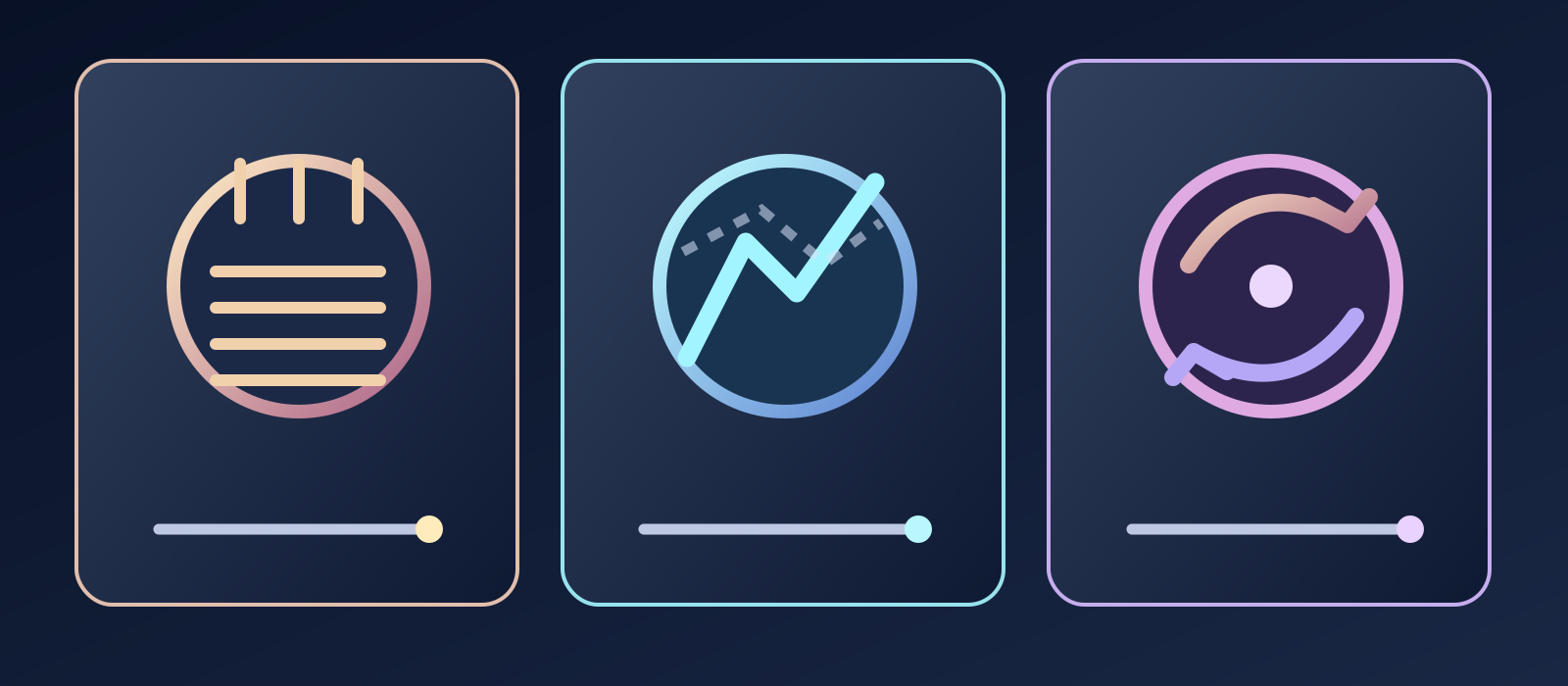
- Input buffering
- Motion prediction
- Rollback correction
GGPO describes rollback as speculative simulation. The local game proceeds using your own real inputs and a prediction for the opponent's missing inputs, often extrapolated from what they were doing. When the actual remote input arrives, the game checks the prediction. If it was correct, nothing extraordinary needs to happen. If wrong, the simulation restores an earlier saved state and quickly replays the intervening frames with the corrected data. This is why the local controller can remain responsive despite network travel time.
What a visible rollback actually looks like
A rollback does not ordinarily mean the server teleported someone as punishment. It means the currently displayed prediction was revised to match later-arriving information. A few frames of correction may be subtle, while large corrections can make a fighter snap position or skip the expected portion of an animation. GGPO's developer materials warn that rendering and audio effects must be managed around replay to prevent duplicated or missing presentation. A successful underlying result can still look abrupt when packets arrive much later than expected.
Why deterministic simulation matters
Rollback needs a simulation that behaves the same way when replayed from the same state and input stream. GGPO's developer guide requires deterministic frame stepping, complete state capture and the ability to rerun logic without rendering each replayed frame. Hidden variables, inconsistent random-number generation and simulation tied to variable frame time can cause desynchronization. This is engineering work, not merely switching on a network option. Strong rollback also depends on testing under artificial delay and ensuring audio, particles and cameras respond properly to corrections.
Ping, jitter and lost packets do different damage
Ping usually summarizes round-trip time, but not its consistency. Jitter means arrival times vary, while packet loss means some inputs must be resent or approximated. Two connections with similar average ping can therefore feel dramatically different. Sustained high delay forces longer predictions or buffers; bursts of loss can produce conspicuous corrections. Video streams, voice chat and Wi-Fi contention may add load, but blaming one device without measurement is unwise. A game should ideally report loss and stability, not just a single reassuring number.

A wired connection helps, but is not magic
Ethernet often removes a source of wireless contention and roaming, but it cannot repair poor routing, a distant data center or overloaded internet links. A low advertised broadband speed is not automatically fatal to a fighting game, which typically exchanges compact input information rather than a full rendered video stream. Quality and consistency are crucial. Players should compare several matches with a stable wired setup when practical, avoid unnecessary background traffic, and treat persistent region-wide issues as something the developer or service provider may need to address.
2XKO's deliberate three-frame input buffer
Riot's October 2025 2XKO engineering explanation says the team designed its combat around a fixed three frames of input delay, applied both online and offline. That is an explicit design choice for 2XKO, not a statement about GGPO as a whole or all fighting games. Keeping the same baseline timing in training and network play aims to preserve muscle memory. Riot also emphasized stable frame pacing across PC and consoles. Fixed local feel can coexist with occasional network corrections: the goal is consistent response, not a physics-defying elimination of latency.
What Riot's Fair Play experiment proposed
In the same October 2025 post, Riot described Fair Play mode as experimental. The proposed game server would grant a brief input-arrival window; if an opponent's input stayed late, their last input could be reused so a lag switch or stalled client did not freeze everyone else's experience. This shifts some consequences of a player's unstable connection onto that player, a trade-off that demands careful tuning. A proposed feature in a developer blog should not be described as universally deployed or permanently adopted. Only current official release information can settle implementation status.
Why four-player fights complicate sync
2XKO's engineering discussion highlights how synchronizing clocks grows harder with multiple active fighters. In peer-to-peer games, each peer has to agree on timing; in a client-server architecture an authoritative server can coordinate the frame clock and reduce asymmetry in how players experience corrections. That does not prove client-server is always faster or superior. Routing and infrastructure still matter, and a centralized authority introduces its own operational costs. The real player question is whether both teams experience a consistent and predictable interaction window.
Frame pacing matters beyond the network
A match can stutter without a network fault if the local PC or console fails to simulate and display frames at a steady rhythm. Riot's 2XKO team singled out frame pacing because uneven delivery disrupts the timing of one-frame links even when button-to-action latency appears low on average. Display response, vsync choices, game workload and background interruptions can compound what network delay already does. Players should therefore distinguish a persistent local frame-rate hitch from a correction caused by delayed remote data before drawing conclusions about opponents.
Guilty Gear and the spread of rollback
Arc System Works advertises rollback netcode for the Nintendo Switch edition of Guilty Gear -Strive-. That shows the method has moved from specialist experiments into commercial fighting games on very different hardware. But a game displaying a 'rollback' label is not proof every matchup will feel identical. Smoothness depends on connection quality, local performance, deterministic implementation, the rollback window and how gracefully the presentation handles predicted frames. Compare the real experience and available indicators rather than treating the label as a quality guarantee.
How to compare online quality fairly
A practical comparison starts with reproducible conditions: same game and region, several matches at similar times, local frame-rate stability and official connectivity indicators where available. Note whether input response is consistently late, whether characters jump only during bursts of loss, or whether the whole application pauses independently of rival movement. Don't assume that a single 30-second clip, one smooth offline training match or a win/loss result proves netcode quality. Matchmaking geography and opponent stability also change the sample.
What developers should communicate
Useful transparency includes average and fluctuating connection delay, packet loss, rollback frames, stable local frame pacing and warnings when matchmaking must widen its geographic range. Tutorials can explain why a correction is not the same as cheating, and player-facing documentation can clarify which connection modes are supported. Studios should test the worst plausible conditions without promising zero lag. Competitive integrity means acknowledging limits and avoiding misleading claims such as 'rollback eliminates latency.'
The conclusion: responsive is not correction-free
Rollback is a powerful way to keep local controls responsive while the network catches up, not a miracle that makes distant inputs arrive instantly. Delay-based solutions may look steadier yet feel less direct; rollback may feel immediate but display corrections when predictions fail. Riot's specific 2XKO design, GGPO's open technical explanation and Guilty Gear's commercial implementation illustrate different pieces of the trade-off. Riot announced in August 2026 that active 2XKO development would conclude in December while servers were expected to stay available; this article discusses previously documented engineering choices, not a promise of future updates. The best match feels fair because inputs, timing and network limitations are communicated and managed.