

Imagine winning the most memorable match of your season, planning to study the final round or make a video about it, and discovering that the replay no longer opens after an update. It can feel as if the game erased part of your history. Yet an interactive match replay is not necessarily a video file, and saving an entry in a game's menu does not guarantee that every future version can play it. Official explanations from Epic, Riot and Blizzard reveal why this matters for practice, content creation and trust.
A replay is not necessarily a screen recording
An OBS recording or console capture stores the actual picture and sound from the player's screen. Interactive replay systems often reconstruct action from game data, allowing alternate viewpoints, pauses or a free camera. That makes them more flexible for reviewing decisions, but may tie them to the game engine and version that interprets those events. We cannot assume every studio uses one identical file format. The essential distinction is between preserving a video of what appeared and reconstructing a playable view of what happened.
What changes when a game receives a patch?
A patch may alter character abilities, maps, animation timing or the data needed to represent events. Maintaining playback of old replays can require legacy assets, extra compatibility work and testing across versions. These are plausible engineering reasons for problems, not proof that every publisher deletes replays for exactly the same reason. The player sees a missing memory; the developer may see a compatibility contract that has changed. Good product design must explain the boundary rather than leaving players to guess.
Fortnite's version limitation is explicit
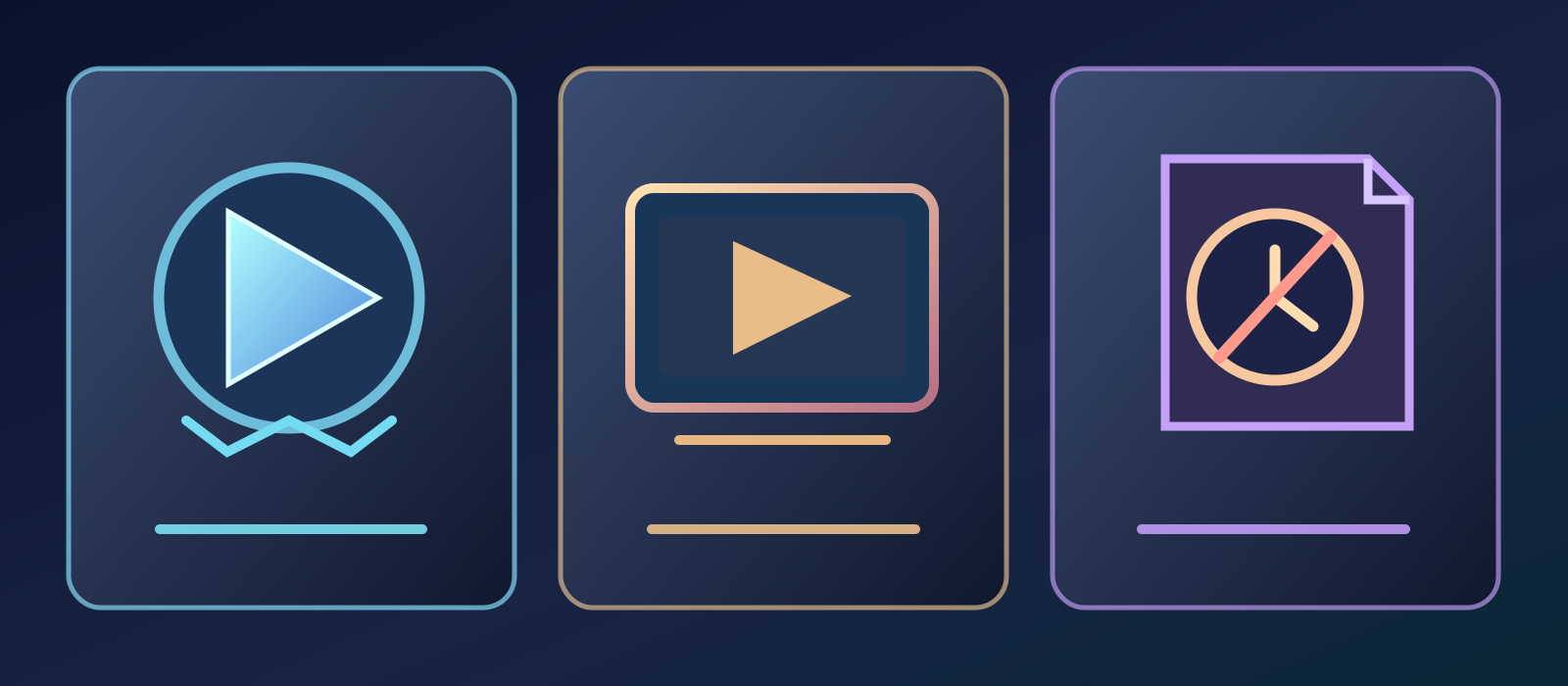
- Interactive replay
- Independent video
- Patch compatibility
Epic's official Fortnite help page states that replays can only be played in the game version in which they were recorded. It says old replays become invalid after a new update unless they have been saved, and describes selecting and renaming an entry within the replay browser. Epic also says PlayStation and Xbox have a ten-saved-replay limit while PC does not share that numeric cap. Crucially, the word saved must not be interpreted as a blanket promise of everlasting compatibility with all future builds.
Saving an entry is not exporting a normal video
Renaming a replay inside a game is a feature of that game's replay-management system. It does not automatically convert the original match into an independently playable MP4. If a moment truly matters, recording a video by permitted means before a version change is a useful separate safeguard. These two kinds of archives offer different benefits: an interactive replay for studying positions and perspectives, and a video recording for reliably showing a fixed moment. Players should not assume they own identical rights or long-term access in each case.
What VALORANT brought to match review
Riot launched VALORANT's replay system starting with PC patch 11.06 in September 2025 and later planned platform availability according to its official rollout schedule. The documented features include every player's first-person view, a free third-person observer camera, slow motion, fast-forward, round skipping and event indicators. These tools can help explain rotations, timing and crossfire from angles not available during the match. A replay can therefore be valuable as a learning resource, not merely a collection of flashy highlights.
The replay view can differ from the player's knowledge
Riot openly acknowledges visual limitations in VALORANT replays. Its FAQ notes that toggling enemy outlines does not fully hide enemy information on the minimap, and some ability-placement maps and markers are not reproduced as they appeared live. Watching a retrospective camera therefore does not prove a player had the same information at that instant. For fair analysis, distinguish what the spectator tool reveals after the fact from what the player's original screen and audio actually communicated in the round.

Friend sharing became a new social use case
VALORANT patch 12.10 on May 27, 2026 added access to eligible friends' replays through their Career pages. Riot specified supported Competitive, Unrated, Swiftplay, Premier and Custom matches, and said Custom-game recording must be deliberately enabled by the lobby owner before each new match. That small condition matters: no replay button on a particular custom game may reflect a configuration choice rather than universal account corruption. Sharing also turns private practice into collaborative learning, where a team can discuss the same fight from different positions.
Overwatch shows why 'every patch' is misleading
Blizzard's June 30, 2026 Overwatch client-update notes explicitly state that replay codes were wiped. Other hotfix notes have said replay codes from a recent patch remained available. These official statements describe the behavior of particular updates, not a universal rule that every Overwatch hotfix deletes every recording. Before asserting that a game always removes its history, check the relevant patch notes and the period of recordings affected. The distinction is important when a player wonders whether their missing replay is expected or anomalous.
Why ordinary players need replay access
You do not have to be a professional competitor to benefit from one reviewed round. Did you leave cover too early? Was a teammate nearby? Did a lost fight result from positioning, timing or communication? Watching a different view can reveal mistakes that were difficult to notice while reacting under pressure. That said, not every hobby session needs a forensic investigation. Replay systems should make reflection optional and rewarding rather than turn every defeat into unpaid homework.
For creators, game history is more than a viral clip
An interactive camera allows creative choices: telling the story from several viewpoints, tracing a tactical rotation or recreating a cinematic angle. A standard screen recording instead preserves what the recorder saw in the moment. Losing the replay can remove opportunities to explain an important match. Content production must still respect the game rules and other players' privacy, including any sensitive chat or account details. Access to a spectator camera should not be mistaken for unlimited permission to expose people.
Can a replay definitively prove cheating?
An observer view may reveal conduct worth reporting, but a replay is not a final verdict. Network interpolation, reconstruction differences and information exposed only during replay can make an action look more suspicious than it appeared live. Riot's documented visual limitations are one reason to be cautious. Where a reporting system exists, use the official channels and consider the complete circumstances rather than declaring guilt from a short edit. Fair treatment should protect both victims of cheating and players accused without adequate evidence.
Storage and privacy are real design constraints
Keeping every replay forever may involve substantial storage, transfer, indexing and compatibility maintenance, as well as responsibilities for protecting information about participants. These are legitimate considerations, but their existence does not justify unexplained retention periods. Games can disclose expected expiration, provide notices ahead of incompatible updates or offer a safe video-export route. Neither infinite storage nor silent deletion should be treated as the only available design choice; each system has its own technical and legal limits.
Comparing the three games without false equivalence
Epic explains Fortnite's version dependence and replay-management limits. Riot demonstrates the training value and eligibility rules of its VALORANT spectator tools. Blizzard's notes provide a concrete example of a patch invalidating Overwatch replay codes. These are different policies and product decisions, not interchangeable evidence that all competitive games delete recordings identically. A meaningful comparison asks how accessible replay history is, how clearly the rules are explained, and what options players actually have when a patch is approaching.
A practical approach to protecting important matches
Treat an interactive replay as potentially temporary unless your game's current policy promises otherwise. If a match is especially important, examine the official save features, make an authorized video capture and check that the recording plays independently before a large patch. Avoid unofficial tools promising to decrypt old replay formats or modify the client, since they may risk the account or device. This is a preservation mindset, not a universal technical recovery guide or a guarantee that an expired file can be restored.

What developers could improve
Publish clear retention and version-compatibility information. Warn users when old replays may stop working, distinguish replay bookmarks from self-contained videos, and explain when recording must be enabled for custom modes. Consider privacy-aware export tools, short highlight preservation or annotations for crucial rounds where feasible. No single studio should be expected to operate permanent archives for every match, but players deserve understandable terms for a feature that can hold hours of valuable memories and competitive learning.
Conclusion, sources and limitations
A finished match can still hold lasting value. Replays support learning, memory and creative work, yet their dependence on clients, data formats and retention decisions can make them fragile compared with standalone video. This analysis relies on Epic's Fortnite support explanation, Riot's September 2025 VALORANT replay FAQ, its May 2026 friend-sharing patch notes, and Blizzard's June 2026 Overwatch patch notices. Official policies can change, and we must not generalize one game's compatibility or retention rules to another. Our broader recommendations are editorial judgments, not inside knowledge of source code.