

A player opens the store page for a blockbuster game, sees the trailers translated for their region, then discovers that the actual menus, dialogue, and quest descriptions are not available in their language. For Arabic-speaking players, the gap can be especially visible when right-to-left text and Latin interface conventions collide. The problem is not only the inconvenience of reading English. Missing localization can hide story details, important choices, technical settings and accessibility information. But the answer is not as simple as assuming that a publisher dislikes one audience. What languages ship is shaped by business priorities, software design, editorial quality and how clearly support is communicated.
Localization is not a switch you flip after development
Good game localization is more than translating a spreadsheet. Menu labels, item descriptions, jokes, voice cues, cinematic subtitles, skill tooltips, account warnings and error messages all need contextual understanding. A correct dictionary translation may still mislead a player if the on-screen button does something different. Longer strings can overflow an interface built around brief English labels; dialogue may be timed to a fast cinematic. Quality assurance therefore includes using the actual game, not simply accepting a text file because every cell has content.
Interface, subtitles and full audio are separate features
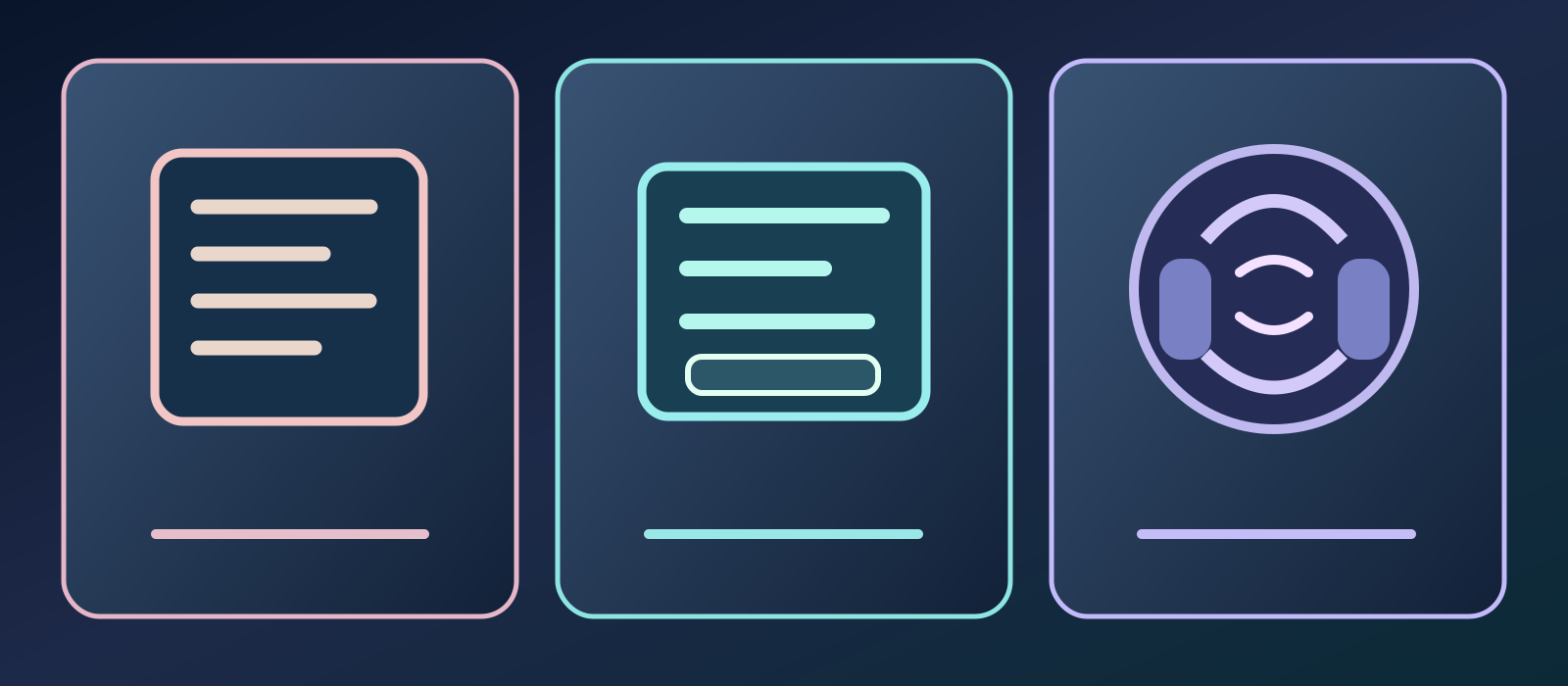
Steamworks explicitly provides separate language-support classifications for Interface, Subtitles and Full Audio. A title may explain its story with translated subtitles while keeping settings in English, offer a native interface with English character voices, or supply complete voice performances in another language. None of those combinations is inherently dishonest if described accurately. The danger is a vague 'supports Arabic' claim that allows buyers to mistake a localized store description, a few subtitles and a fully localized experience for the same thing. Players should check the actual product's language matrix.
A localized Steam store page is not a localized game
- Store page
- UI and subtitles
- Fully dubbed audio
Valve distinguishes store-page localization from in-game localization. Developers can provide either independently, and Steam recommends supporting both where possible. A polished translated product pitch does not prove that tutorials, achievements, menus, or spoken story content use that language. Conversely, a game may technically support a language without a comprehensive localized marketing campaign. Before purchasing, distinguish the interface, subtitle and audio entries from the language of the promotional material. Marketing language is useful context, not the source of truth about executable game content.
What Steam's Arabic support actually means
Valve lists Arabic among languages available for game content and language selection in an individual game's settings, but its language documentation contains a crucial exception: the Steam client UI itself is not currently localized into Arabic and Arabic cannot be selected as the client's operating language. These are different layers of support. Saying that a game on Steam can offer Arabic is supported by Valve's documentation; describing the Steam desktop client as fully Arabic because of that would be inaccurate. This distinction matters when players assess responsibility for an untranslated interface.
Why developers prioritize some languages before others
Steamworks encourages developers to plan translation around likely audiences, store traffic, regional wishlists and community feedback. It also explicitly acknowledges that supporting every language may not deliver equal returns for every project. Translation, editorial review, contextual testing, updated strings and sometimes voice recording require resources, but it would be irresponsible to invent a universal cost per word or to assign one financial motive to every studio. A small narrative project and an enormous live-service world have different kinds of complexity. Recognizing these trade-offs is compatible with asking studios to communicate limitations clearly.
Language preference is not the same as location
Valve warns developers against confusing language with geography. Arabic speakers can buy games while living in Istanbul, Berlin, Paris or California; people in predominantly Arabic-speaking countries may choose other languages. Using billing territory as a perfect proxy for what the player wants will miss real demand and create false assumptions. Language selection, publicly expressed requests and opt-in feedback can give a more relevant view. Even those signals are incomplete, and they should never be turned into a stereotype about what any nationality can read or afford.
Right-to-left design is a practical engineering challenge
Arabic uses joined letter forms and bidirectional text behavior unlike ordinary left-to-right Latin strings. A tooltip can combine Arabic words, English product names, controller glyphs, percentages and numerals. If layout order or glyph shaping is mishandled, the result may be unreadable even though the translation is linguistically correct. Designers have to decide what should mirror and what should remain stable, support legible Arabic fonts, and test menus at real screen sizes. This is a general design concern, not proof that any particular game engine is incapable of Arabic.

Literal translation can change a player's decision
Consider a role-playing game where an ambiguous skill description implies that a bonus stacks when it actually replaces an existing effect. The player might commit hours to a character build based on the mistaken text. A multiplayer menu could confuse 'cancel' and 'confirm' or mislabel a limited-time purchase. Humor, historical references and character personality add further difficulty. Localization editors need context and test access to ask not only 'Is the sentence grammatical?' but also 'Does the player understand the same rules and stakes intended by the original design?'
Subtitles and captions are not identical accessibility tools
Microsoft's Xbox Accessibility Guideline 104 distinguishes subtitles, which represent spoken dialogue, from captions, which can also convey meaningful non-speech audio, speaker identity and sound location. Arabic subtitles do not automatically help a deaf or hard-of-hearing player notice approaching footsteps, an alarm, or a crucial off-screen sound. Meanwhile accurate captions in a language that a player cannot read do not remove a language barrier. Localization and accessibility overlap, but treating them as the same product feature can leave important needs unmet.
Readability requires the right timing, size and placement
Fast cutscenes leave little time for long lines of text, while a compact inventory overlay may crop an otherwise excellent translation. Xbox's accessibility guidance addresses subtitle size, line length, contrast and customization, and advises avoiding interface elements that hide the text. Those are guidelines for inclusive design, not universal legal requirements imposed on every developer. Their larger lesson is simple: providing a file labeled 'subtitles' is not enough if the writing cannot be comfortably read when gameplay demands attention elsewhere.
Why dubbing helps, but need not be the first milestone
Full voice localization can preserve emotion, rhythm and characterization for audiences who prefer not to read during combat. It also involves casting, directing, recording, technical integration and keeping replacement lines synchronized as content changes. A studio may reasonably prioritize complete menus and subtitles before offering a large dubbing package. That decision should be communicated honestly. It is inaccurate to call a game 'not localized' solely because it uses English voice acting if it provides a well-edited, comprehensive interface and text translation.

Language-specific downloads can limit unnecessary storage
Valve documents separate language depots as an option when language-specific content is substantial, so users need not receive every large audio asset. Microsoft's Xbox GDK Intelligent Delivery similarly describes marking package chunks by language, selecting the closest suitable chunks at install time and offering fallback behavior. Neither delivery option makes human translation free or guarantees every game uses it correctly. They show that supporting multiple audio tracks and forcing every player to install all of them are two different technical choices.
What community translators can and cannot replace
Communities sometimes produce fan translations, terminology proposals and practical reports on broken strings. Valve encourages studios to involve localization professionals and learn from player feedback. But an unofficial patch is not a publisher guarantee, may break after updates and can raise copyright or game-terms questions depending on its distribution. Players should not have to infer official support from screenshots of a mod, while studios should not present volunteer labor as permanent proof that their live game is fully supported in a language.
A better standard for honest language support
Not every development team can ship every world language on day one. A credible standard is precise disclosure: which languages cover interface, tutorials, subtitles, quests, accessibility cues, current DLC and full audio? What happens when a new season adds untranslated text? Is there a public feedback route for mistakes? Even a cautious roadmap can be useful if it avoids implying guaranteed deadlines. A clear 'Arabic subtitles and UI, English voices' message respects buyers more than a sweeping label whose meaning varies across screens.
Conclusion: real localization restores the freedom to understand
The value of language support is not the number of flags on a marketing graphic. It is the ability to enter the story, understand systems and make informed decisions without avoidable language barriers. Valve's documentation establishes that store presence and in-game content are independent, and that subtitles, interface and audio represent different kinds of support. Microsoft's accessibility guidance reminds us that timing, readability and audio meaning matter as much as words. The practical goal is not to demand expensive dubbing from every studio; it is to make each promised level of localization work well and describe it truthfully.
Sources & references4
Sources reviewed October 9, 2026: Valve Steamworks Localization and Languages; Valve's language support matrix and Arabic-specific client exception; Microsoft Xbox Accessibility Guideline 104 on captions and subtitles; and Xbox GDK Intelligent Delivery language package specifications. These documents explain the platforms' own design and publishing options. They do not establish a specific studio's motivations, the actual translation budget for any game or whether an untested title works perfectly in Arabic. The commercial and cultural implications here are Zaplat Gaming's editorial analysis.