

Attacking movement in EA SPORTS FC 27 is no longer just about telling a teammate to sprint up the pitch and hoping an assisted pass finds them. EA introduced Triggered Curved Runs and Pass & Follow Runs, changed the way attackers read empty space and put a distance limit on manually triggered runs. If your runner unexpectedly stops or follows a curved route instead of running straight ahead, that could reflect the new design rather than a broken button.
The official FC 27 Gameplay Deep Dive documents the button combinations for PlayStation and Xbox, explains how a passer may overlap or cut inside depending on available space, and notes that curved paths can take longer to complete. Together with the update to through passes, these changes make the timing and direction of your next pass matter more than ever.
This guide separates exact EA-confirmed mechanics from practical drills we've devised. It does not promise that any combination guarantees a goal, that the AI will beat the offside line for you, or that a curved run never ends. We also do not assume your custom PC keyboard bindings match the default console-controller shortcuts.
What Triggered Curved Runs actually do
- L1+R1 / LB+RB triggers the new curved run.
- L1+R1+X / LB+RB+A passes and follows.
- Open space influences overlap/underlap; the arc can take longer.
- Manual runs are finite; re-trigger when you're in range.
- Official mechanics and our coaching examples are clearly separated.
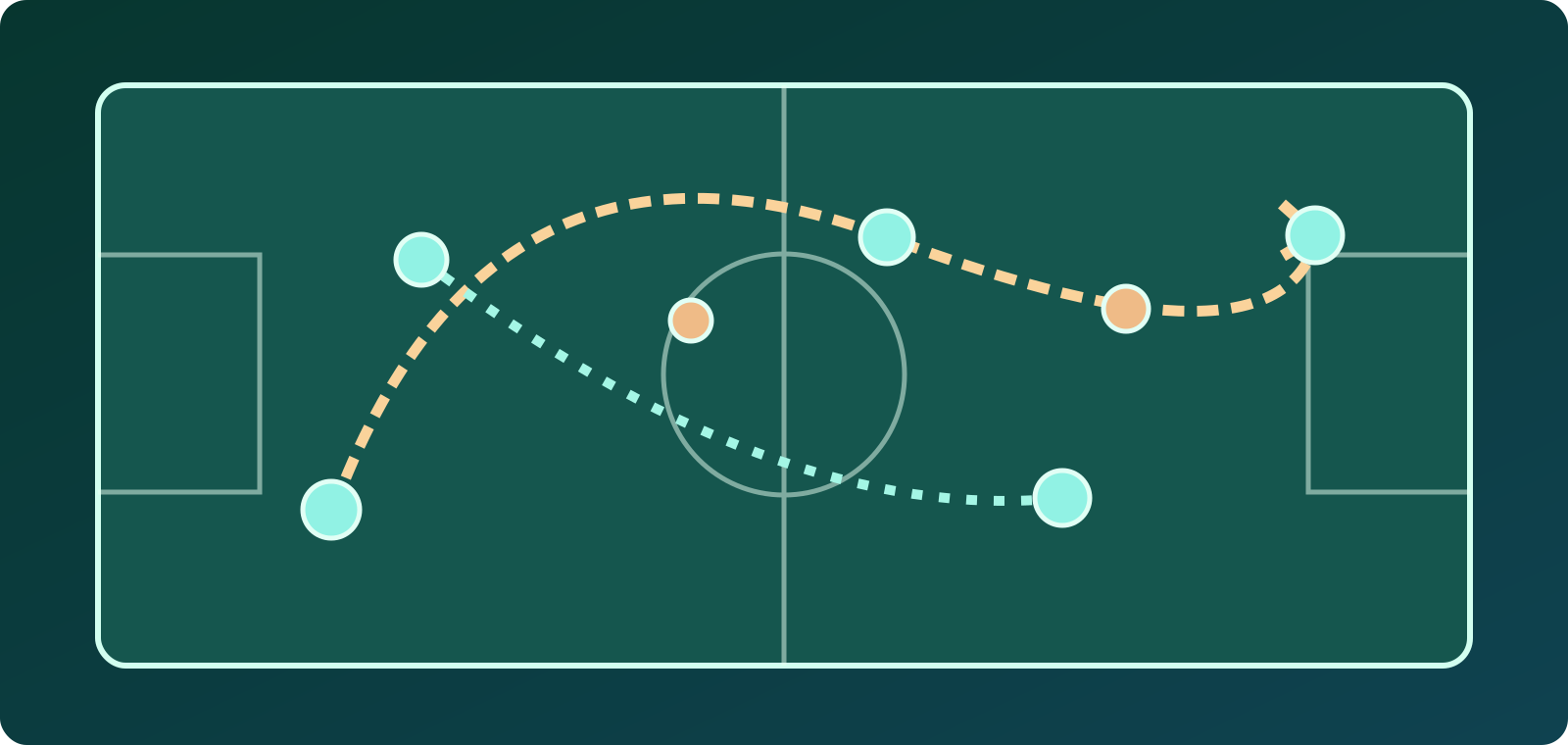
A Triggered Curved Run makes the off-ball attacker seek an arc into available space, instead of simply running forward in a direct line. EA says the feature is designed to help a player bend around defenders and get behind the opposition more creatively.
It is not an automatic escape from pressure. A curved path may be longer and take more time than a straight sprint, especially when a defender is between the ball carrier and the open channel. Your pass must still be timed to the moving player.
Exact PlayStation and Xbox input
EA lists Tap L1+R1 for Triggered Curved Runs on PlayStation and LB+RB on Xbox. These are the official controller commands in the FC 27 Gameplay Deep Dive, not a promise of an identical mapped keyboard shortcut in every PC configuration.
If you've remapped the controller or use keyboard/mouse, review the corresponding command in your current control layout. Test it in an appropriate on-ball situation with a teammate available before diagnosing a malfunction.
Curved versus ordinary straight triggered runs
A regular triggered run can send a teammate forward on a comparatively direct path. Triggered Curved Runs instead use space to decide an arcing route. A straight run may reach a point sooner, but might lead directly through the defender's line.
The choice of run is tactical, not proof that one is always better. If the defensive line leaves a side channel, the curved option may create an angle; if the lane is already empty, a direct run may be simpler. Those comparisons are coaching suggestions rather than developer-published success rates.
Pass & Follow: the passer runs again
The new Pass & Follow Runs allow the player who has just passed the ball to follow their pass with a curved run. The official inputs are L1+R1+X on PlayStation, or LB+RB+A on Xbox.
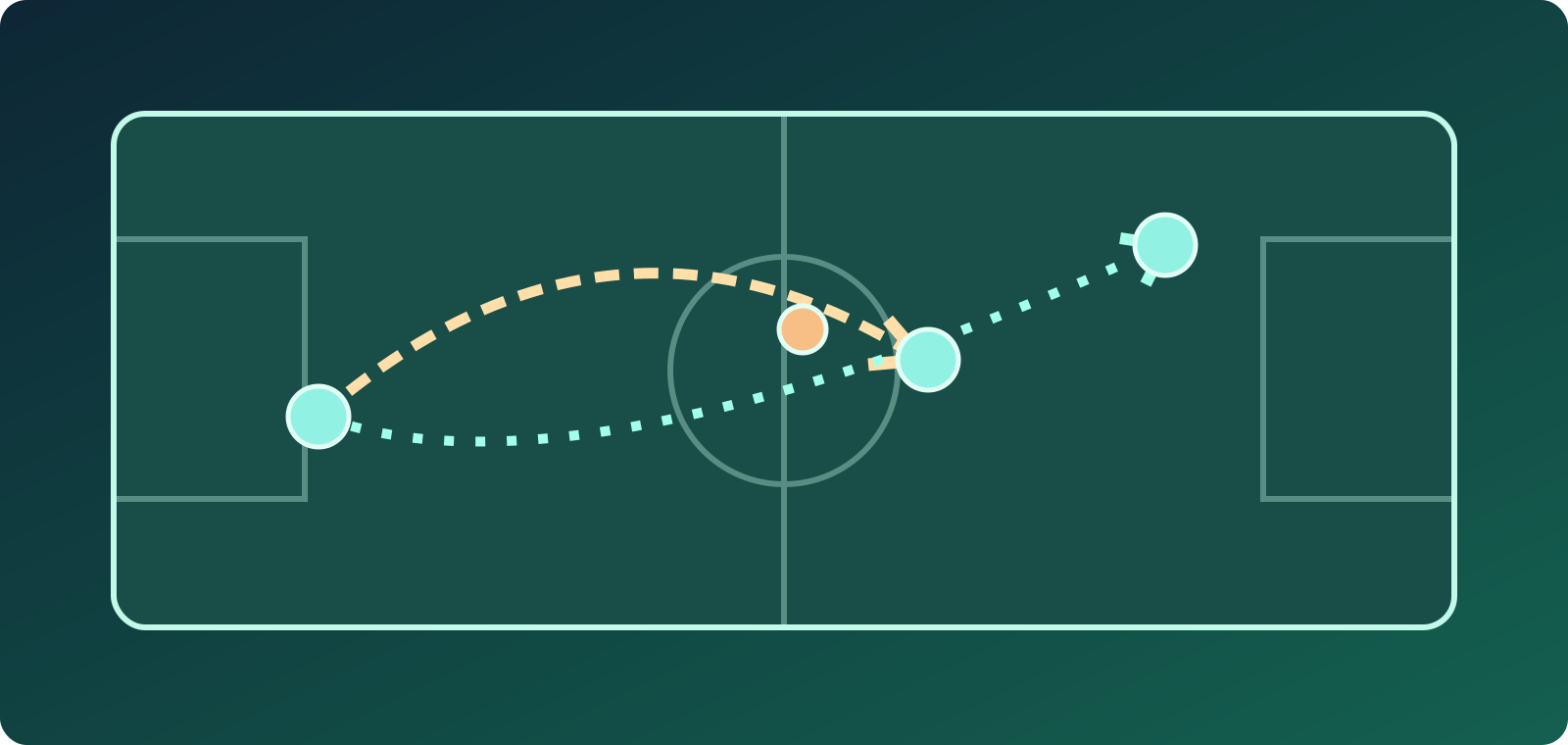
This is not the same as expecting any ordinary pass to trigger an endless sprint. The command combines the pass with a follow-up movement. Watch the original passer after delivering the ball, as that player may become your next passing option.
Overlap and underlap: what determines the route?
EA explicitly says the Pass & Follow runner can overlap, moving outside the ball receiver, or cut inside for an underlap, with the route chosen according to the space available. The player isn't promised one fixed route every time you press the same button.
Notice the nearest defender and the open channel before committing. An outside path might become useful if the middle is crowded, while an inside cut can exploit the opposite shape. Wait to see the actual motion instead of making a blind return pass.
Why manually triggered runs stop early in FC 27
EA changed manually triggered runs so they no longer continue indefinitely. After a limited distance, the attacker stops making that run and returns to occupying space or fulfilling their normal positional responsibility.
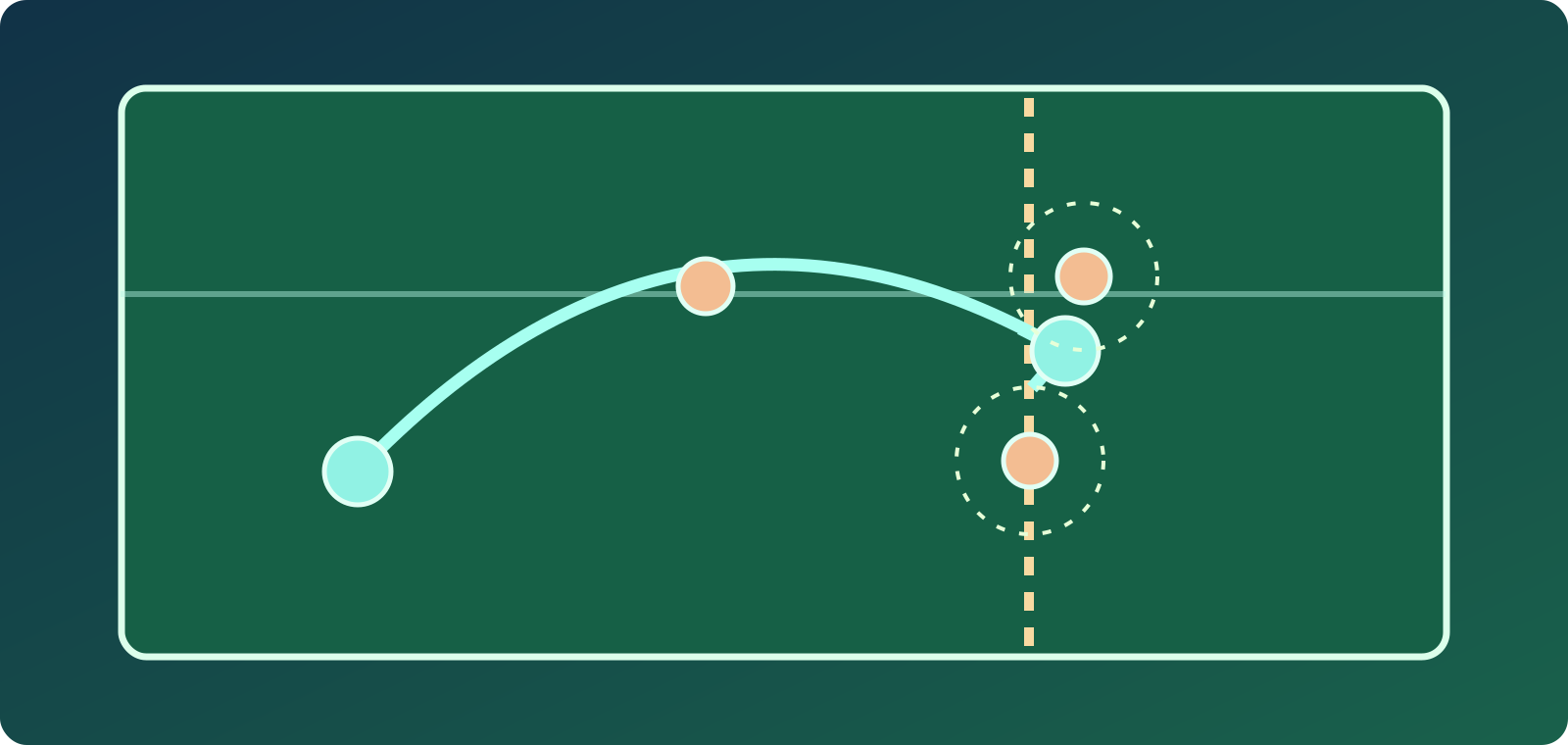
There is no universal distance in meters specified in the cited explanation. Do not rely on old-game habits of triggering a sprint and moving the ball far away while assuming the runner will chase the goal forever.
When and how to trigger the movement again
EA says you can re-trigger an attacking run if you continue playing within the range of the running player. This restriction matters when you carry the ball a long way from the original attacker.
As a practical response, bring the ball and runner back into useful proximity, read the defensive channel and issue the run command again if appropriate. Do not invent a guaranteed range in yards or meters where EA has not given one.
Attacking Spatial Awareness without your input
EA's update to Attacking Spatial Awareness gives AI-controlled attacking teammates a better sense of nearby spaces and positions. Attackers can make contextual curved movements, rather than repeatedly crowding the same defensive lane.
EA gives a winger example: they may stay parallel to the defensive line while waiting for the pass and then curve forward once the ball moves, no longer needing to hold an onside position in the same way after the ball is played. Your timing still matters.
Offside timing is not automatically solved
More intelligent movement relative to the defensive line does not remove the offside law. An attacker who moves too soon relative to the instant a teammate plays the ball can still be caught.
Judge both the passer's release and the runner's route. A delayed through ball may be useful after the runner bends into space, but waiting too long can let the defenders recover. This balance requires practice rather than a universal timing recipe.
Through passes follow your actual aim more closely
EA also reduced directional assistance for ground and lobbed through passes. Instead of strongly steering them toward a lane away from your aim, those balls now follow the user's directional input much more strictly.
This interacts with curved runs: if the attacker cuts to one side but you aim straight toward a defender, do not expect the passing assistant to rescue the ball. Read the chosen path and send the ball into space at a matching angle.
Dinked Passes are more manual, too
Both ground and through Dinked Passes moved to fully manual delivery, according to EA. Input direction and power matter for their quality, raising the skill requirement when attempting to thread the ball over or around pressure.
The run button is not a new shortcut for every type of dinked pass. Train pass strength and receiver timing separately before combining them in a crowded live match; no unsupported command combination is necessary.
Three useful attacking scenarios to practice
Scenario one: a winger and overlapping fullback near the touchline, where Pass & Follow can offer an outside path. Two: a striker facing a central defender, where Triggered Curved Run may target the diagonal shoulder. Three: a midfielder receives between lines and waits until a teammate curves away from their marker before threading a through ball.
These are original coaching examples, not EA's advertised guaranteed formations or probabilities. Recreate each initially with little pressure, then add defenders and notice which route the runner actually picks.
A ten-minute self-training session
Spend two minutes distinguishing straight and curved runs, three minutes playing Pass & Follow on both wings, two minutes observing the new finite-run stopping behavior and re-triggering, and the remaining three minutes aligning through-ball aim with the attacker's current route.
This is our proposed practice structure, not an official 10-minute EA event or reward. After each attempt, log one useful observation: was the miss caused by the wrong command, an unsuitable space, premature delivery or excessive ball-to-runner distance?
Common errors and what to check first
Frequent mistakes include assuming the runner always takes the same side, sending the ball before the curve finishes, triggering a teammate and then carrying the ball far outside their range, or using a remapped controller while reading the default Xbox/PlayStation diagrams.
Separate control detection from movement logic. First ensure the button combo produces a run in a simple training match; then compare different defender positions. An online input-device lock is a separate PC/game-mode issue, not evidence that the curved-run feature has disappeared.
Game mode, platform and balance caveats
The EA Gameplay Deep Dive lists these FC 27 manual attacking mechanics and standard PlayStation/Xbox controls. It does not establish that every formation or playstyle forces exactly the same curved trajectory, nor does it promise the new mechanics cannot be adjusted in later tuning.
Likewise, the game's Competitive versus Authentic design distinction does not justify claiming every aspect of automated defending works identically across them. The runner's position, open space, selected control scheme and context remain relevant.
Fast FAQ and primary sources
Does L1+R1 score automatically? No. Are curved runs always faster? No, they can take longer. Do manual runs last forever? No. Can you send the runner again? Yes, if you're still within its range. Is a custom PC keyboard button guaranteed identical to the PlayStation/Xbox default? No.
Sources & references3
The decisive first-party source is EA's **FC 27 Gameplay Deep Dive** for button inputs and movement limitations; the FC 27 Launch Update and developer gameplay update provide release context, not extra unannounced button mechanics. Reviewed October 8, 2026. Official links